Observation Technology

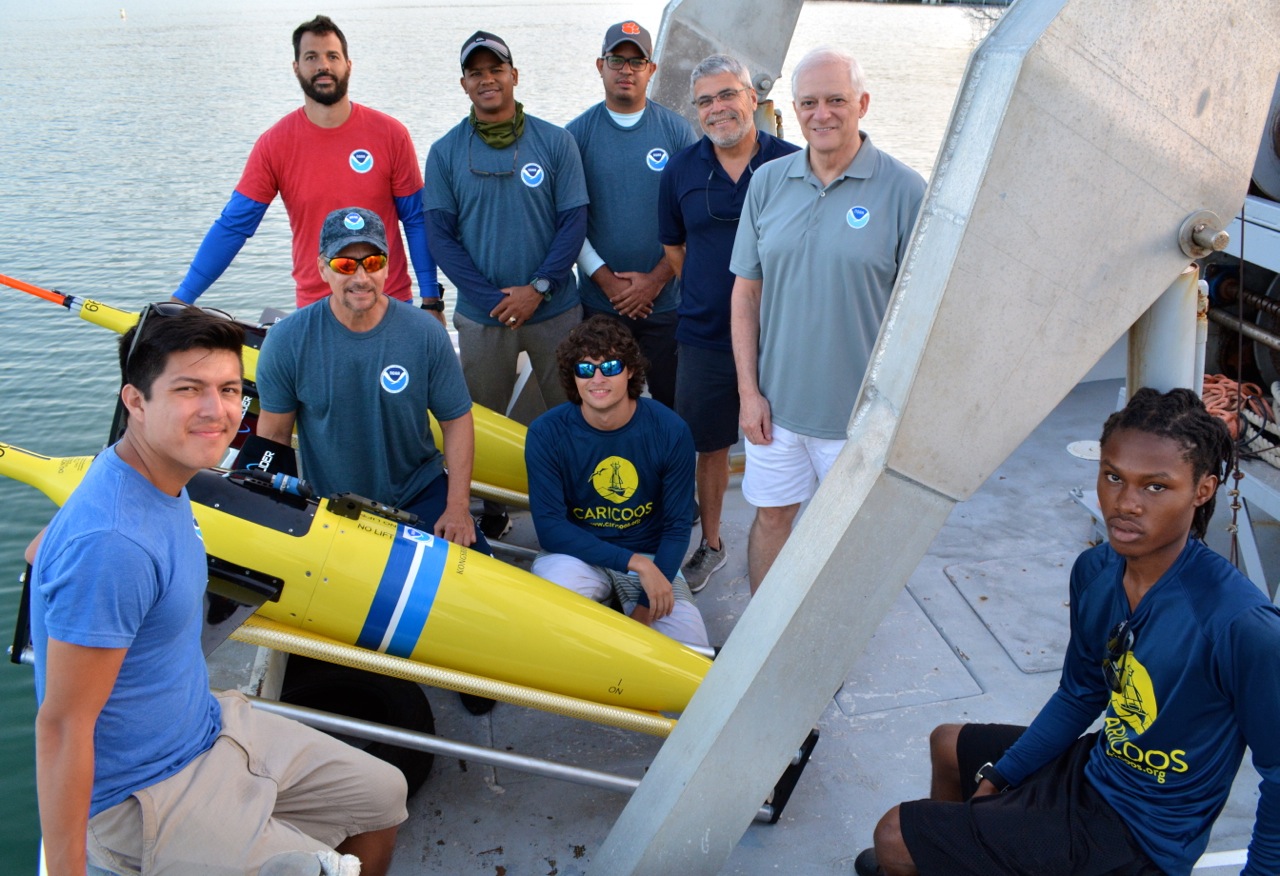
2019 Underwater Gliders Successfully Recovered

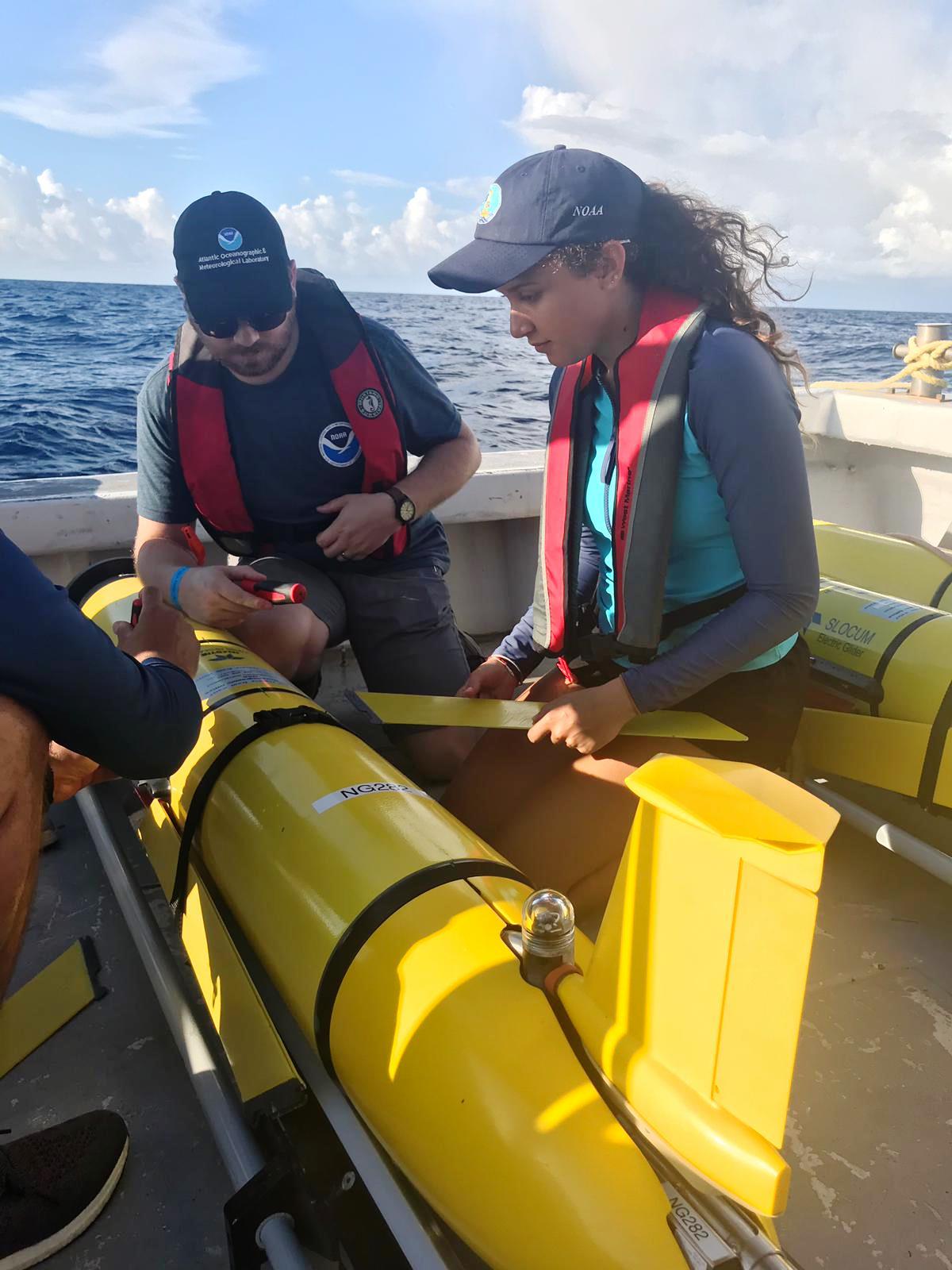
As during previous seasons since 2014,  autonomous underwater vehicles, also known as gliders, were deployed in the Caribbean Sea and in the Atlantic Ocean to collect data on ocean properties for use in the improvement of hurricane intensity forecasts. During the mission the NOAA AOML gliders were capable to successfully occupy  transects in eastern Caribbean… Read More
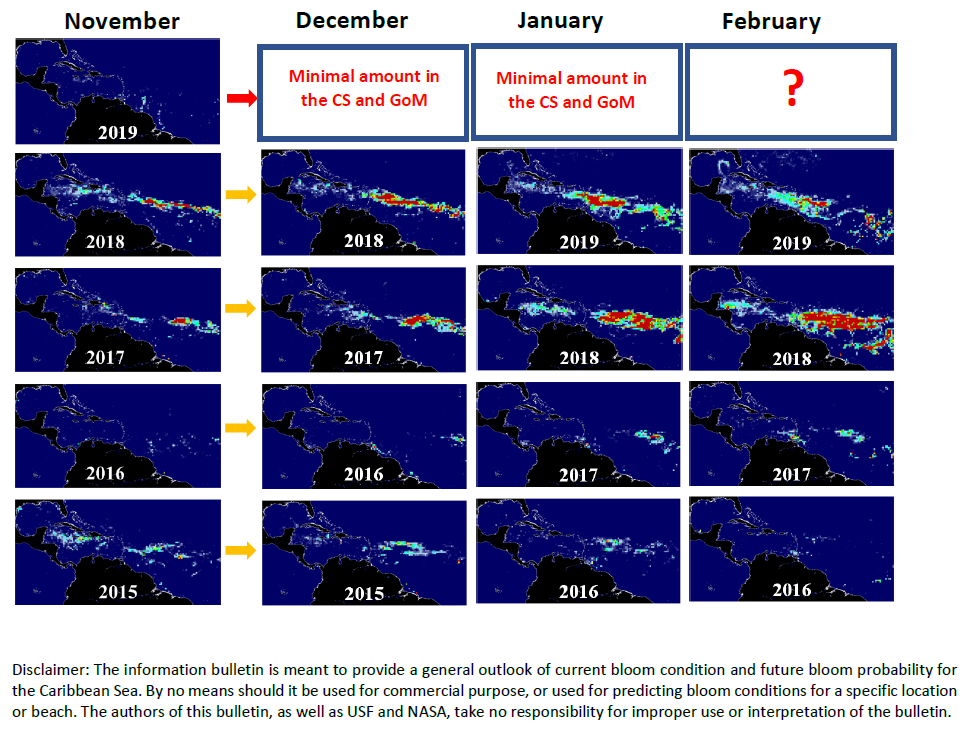
Outlook of 2019 Sargassum blooms in the Caribbean Sea and Gulf of Mexico – December 1, 2019

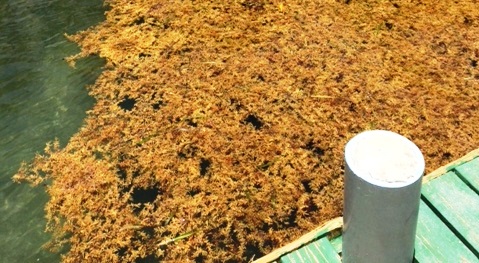
The maps above show Sargassum abundance, with warm colors representing high abundance. November 2019 continued the situation of October 2019. Very little Sargassum was found in the Gulfof Mexico (GOM), Florida straits, Caribbean Sea (CS), and Central West Atlantic (CWA). In all regionscombined, the Sargassum amount reduced to ~0.5 million metric tons in November 2019… Read More

Sargassum outlook update, by USF Optical Oceanography Lab-September 30, 2019 update

The maps below show Sargassum abundance, with warm colors representing high abundance. During September 2019, Sargassum amount has decreased significantly from August 2019 in the Gulf of Mexico (GOM), Florida straits, Caribbean Sea (CS), and Central West Atlantic (CWA). The reductions are more than our August 2019 prediction, at rates higher than previous bloom years…. Read More

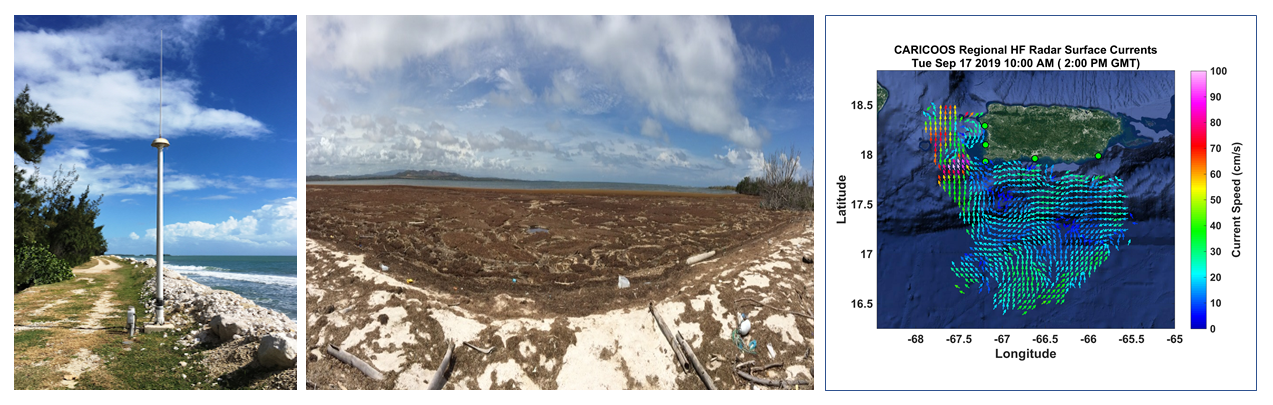
U.S. IOOS allocates funds for CARICOOS that will support continuation of its ongoing operations, expand surface current observations, enhance the hurricane glider program, issue Sargasso inundation forecasts and asses its impact on coastal ecosystems

Every year, each of the eleven IOOS Regional Associations submits their revised work to the U.S. IOOS Office. The latter includes specific actions, new product developments, and partnerships that will be carried out to accomplish the mission of providing unquestionably high-priority decision-supporting information for enhancing safety and efficiency in our coasts as well as proper… Read More

Three Naval Oceanography ocean gliders join six operated by NOAA AOML-CARICOOS in the Caribbean Sea and Tropical Atlantic

Naval Oceanography recently delivered three ocean gliders that will join six currently in operation by NOAA AOML-CARICOOS in the Caribbean Sea and Tropical Atlantic waters for a mission primarily focused on improving hurricane intensity forecasts. CARICOOS scientists and students and NOAA/AOML personnel deployed the three gliders off La Parguera near the southwest corner of Puerto… Read More

Sargassum outlook – August 2019 update

The maps below show Sargassum abundance, with warm colors representing high abundance. During August 2019, while there are still large amounts of Sargassum in the Central West Atlantic (CWA) and Caribbean Sea (CS), these amounts are lower than in July 2019. The amounts in the eastern Gulf of Mexico and Florida Straits have also reduced…. Read More

Sargassum outlook update, by USF Optical Oceanography Lab – July 2019 update

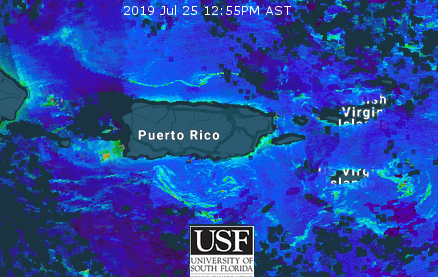
The maps below show Sargassum abundance, with warm colors representing high abundance. The July 2019 situation is similar to June 2019 for all regions. Specifically, the following regions continued to experience large amounts of Sargassum: Central West Atlantic (CWA), entire Caribbean Sea (CS), eastern Gulf of Mexico (GoM), northern Florida Straits, and waters off east… Read More

Expanding underwater glider observations in the NE Caribbean

CARICOOS continues collaborating with NOAA’s Atlantic Oceanographic and Meteorological Laboratory’s (AOML) Physical Oceanography Division (PhOD) by assisting in the deployments, recoveries, and refurbishment of underwater gliders. This year, the hurricane glider operations will be enhanced by establishing a network of underwater gliders in the Caribbean Sea, tropical Atlantic Ocean, and east US continental shelf. A… Read More

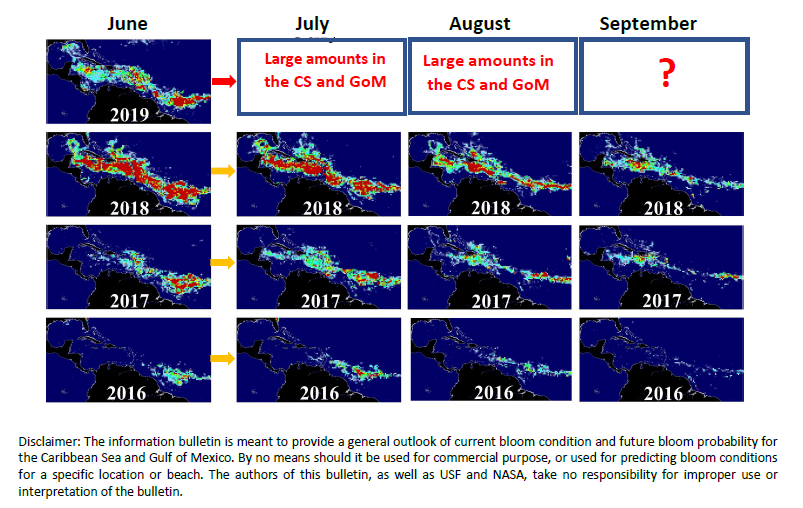
Outlook of 2019 Sargassum blooms in the Caribbean Sea and Gulf of Mexico by USF Optical Oceanography Lab

The maps above show Sargassum abundance, with warm colors representing high abundance. In June 2019, the following regions continued to experience large amounts of Sargassum: Central West Atlantic (CWA), entire Caribbean Sea (CS), eastern Gulf of Mexico (GoM), northern Florida Straits, and waters off east coast of Florida. In addition to numerous reports of Sargassum… Read More

Sargassum outlook – May 2019 update

The maps below show Sargassum abundance, with warm colors representing high abundance. In May 2019, the following regions continued to experience large amounts of Sargassum: Central West Atlantic (CWA), entire Caribbean Sea (CS), eastern Gulf of Mexico, northern Florida Straits, and waters off east coast of Florida. In addition to numerous reports of Sargassum beaching… Read More